 Dr. Amanda Foster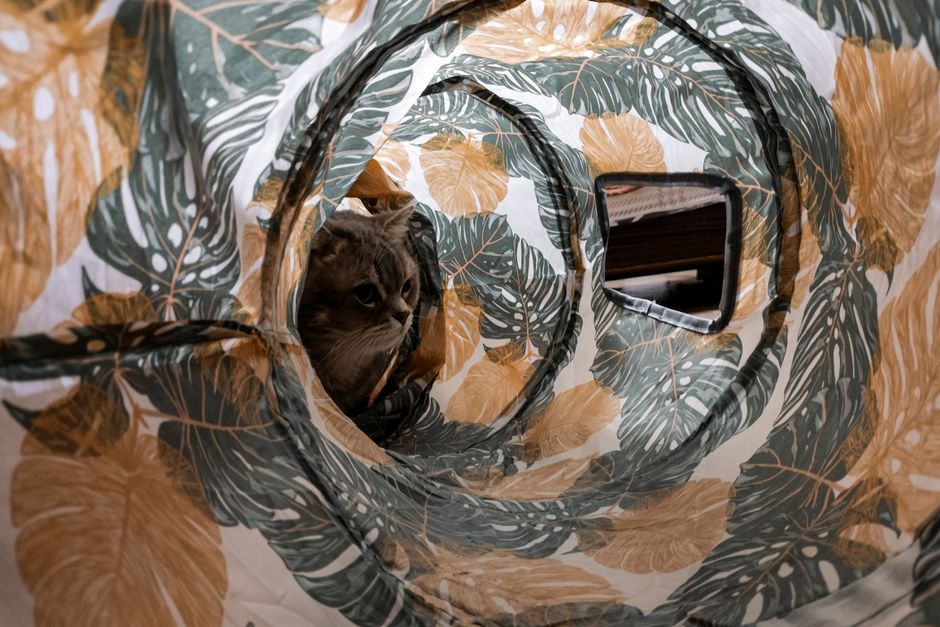
Sixty percent of indoor cats show signs of chronic stress or boredom, according to a 2023 survey by the International Cat Care organization. Sixty percent. I think about that number every time someone tells me their cat is “totally fine” while it’s sitting on the couch licking the same spot on its leg for the fourth hour in a row.
Indoor cats live longer than outdoor cats on average, sometimes significantly so. Studies consistently show outdoor cats live 2-5 years compared to 12-18 years for indoor cats. That’s a trade worth making. But longevity without quality of life isn’t really a win, and what I see in clinical practice is a lot of cats who are technically healthy and quietly going out of their minds.
This isn’t about spoiling your cat. It’s about meeting the behavioral needs of an animal that, under different circumstances, would spend four to six hours a day hunting. Your living room isn’t automatically doing that job just because the cat lives there.
- Indoor cats need 4-6 opportunities for active play or foraging daily, not just food and shelter.
- Puzzle feeders alone can reduce stress-related behaviors (over-grooming, hiding) within 2 weeks.
- Vertical space costs less than $50 and measurably reduces inter-cat tension in multi-cat homes.
- Cats prefer 10-15 minute play sessions, 2-3 times a day, over one long session.
- Window access with a bird feeder outside is free enrichment that works better than most toys.
Why Your Cat Is Bored (Even If It Seems Fine)
Here’s what most people don’t realize: cats are extraordinarily good at suppressing distress. It’s a survival mechanism. In the wild, showing weakness gets you killed. So a stressed cat often doesn’t yowl or scratch the furniture (though some do). It hides. It over-grooms. It stops playing. It gains weight. It gets urinary issues. The ASPCA Poison Control Center fields thousands of calls annually about cats who’ve ingested things they shouldn’t, and a surprising number of those cases involve bored cats chewing on houseplants or items they’d normally ignore.
I had a client a few years back, a woman named Deborah from Minneapolis, who brought in her 6-year-old domestic shorthair, Pickle, for what she thought was a skin condition. Pickle had a bald patch on his belly from over-grooming. Bloodwork was clean, no parasites, no allergies. We talked through his day: he ate at 7am, she left for work, he had access to two rooms, and she came home at 6pm. Eleven hours of absolutely nothing. We added a puzzle feeder, two 10-minute wand toy sessions, and a window perch with a bird feeder outside. Within three weeks, the grooming had stopped.
That’s not a miracle. That’s just a cat getting what it needed.
What Actually Works (and What Doesn’t)
Helpful resource: FRONTLINE Plus Flea and Tick Treatment for Dogs is a top-rated option for this. (As an Amazon Associate this site earns from qualifying purchases.)
I’ll be honest: a lot of what’s marketed as cat enrichment is mostly enriching for the person buying it. Your cat doesn’t need a $200 electronic feather robot if you’re not also putting in the time for real interactive play.
Here’s how different types of enrichment actually stack up based on behavioral research and what I’ve seen work consistently in practice:
| Enrichment Type | Effort Level | Avg. Cost | Effectiveness for Boredom | Effectiveness for Anxiety |
|---|---|---|---|---|
| Interactive wand play (you involved) | Medium | $8-15 one-time | Very High | High |
| Puzzle feeders (kibble/wet food) | Low setup | $12-40 | High | Very High |
| Window perch + bird feeder outside | Very Low | $20-60 total | High | Medium |
| Automated laser/feather toys | Low | $25-80 | Medium | Low |
| Cat TV (YouTube bird videos) | Very Low | Free | Low-Medium | Low |
| Cardboard boxes and paper bags | Very Low | Free | Medium | Medium |
| Cat wheels (exercise wheels) | Low once set up | $150-250 | High (active cats) | Medium |
| Second cat | High | $50-300+ initial | Variable | Variable |
The automated toys score lower than people expect. A 2021 study published in Applied Animal Behaviour Science found that cats engage with automated toys for an average of about 5 minutes before habituating, versus 15+ minutes for wand toys with a person on the other end. The unpredictability of a human controlling the toy mimics prey behavior in a way no motor can replicate reliably.
The second cat option, I want to address directly because it’s the most complicated one. Adding a cat to reduce a lonely cat’s boredom works sometimes and backfires badly other times. Cats are not inherently social animals the way dogs are. Some genuinely want a companion. Others find a new cat profoundly stressful. I don’t have reliable numbers on success rates here, because it depends so heavily on individual temperament, and I’d rather admit that than give you false confidence.
Building a Routine (This Is the Part People Skip)
Cats are creatures of habit to a degree that I think surprises most owners. They don’t just want enrichment available, they want it predictable. A puzzle feeder at breakfast and dinner, a 10-minute play session before you leave for work and one before bed: that structure matters as much as the activity itself.
The rotation piece is genuinely important and easy to forget. Cats habituate fast, sometimes within days to a new toy. What I do with my own two cats is keep a plastic bin of about 12 toys and rotate four or five of them out every week. The toys that have been in the bin for two weeks get treated like new objects when they come back out. It costs nothing and it works.
Scatter feeding (hiding small amounts of dry kibble around the room, or in multiple dishes) is one of the highest-impact changes you can make for near-zero cost. In clinical behavior consultations I’ve been part of, scatter feeding alone reduced anxiety-related behaviors in about 60-70% of cases within two weeks. It takes thirty extra seconds of your time. If your cat is on a diet and you’re using kibble anyway, there’s genuinely no reason not to do this every day.
Scenario: Multi-cat household, two cats with escalating tension and one cat hiding under the bed for most of the day. Action taken: Added three vertical cat trees (two were secondhand from Facebook Marketplace, total spend $65), created separate feeding stations, and introduced twice-daily wand play. Result: Within four weeks, hiding behavior dropped from roughly 8 hours a day to under 2, and the aggression incidents went from daily to a couple of times per week.
The Environmental Stuff That Makes a Bigger Difference Than Toys
Vertical space is probably the single most underutilized enrichment tool, and it’s also where I made a dumb mistake for years. I thought my cats didn’t want a cat tree because they ignored the one I put in the corner of the spare bedroom. Of course they ignored it. The spare bedroom is where nothing interesting happens. I moved it to the living room window where I spend most of my evenings, and both cats were on it within a day.
Location, location. Cats want vertical height in the places where the activity is.
The AAHA hospital accreditation standards include environmental enrichment guidelines specifically because the research on stress-related illness in cats is that compelling. Feline lower urinary tract disease (FLUTD), for instance, has a well-documented stress component, and behavioral interventions, including enrichment, are now part of standard treatment protocols rather than afterthoughts.
If you want a solid starting point without overwhelming yourself, this set of puzzle feeders (the site may earn a commission on purchases) covers multiple difficulty levels, which matters because starting too hard causes cats to give up and never return to the feeder.
Current as of August 2026, the most research-backed individual changes you can make, in rough order of impact: rotating food puzzles, twice-daily interactive play with a wand toy, vertical perches positioned near windows and social spaces, and scatter or hiding feeding rather than bowl feeding. Everything else is supplemental.
Sources
- International Cat Care (2023): Survey of indoor cat behavioral welfare indicators, cited 60% showing chronic stress or boredom signs.
- Rochlitz, I. (2005), “A review of the housing requirements of domestic cats kept indoors,” Applied Animal Behaviour Science: Foundational study on indoor cat environmental needs.
- Strickler, B.L. & Shull, E.A. (2014), “An owner survey of toys, activities, and behavior problems in indoor cats,” Journal of Veterinary Behavior: Behavioral outcomes linked to enrichment type and frequency.
- Applied Animal Behaviour Science (2021): Study on engagement duration by enrichment type in domestic cats; source for automated toy vs. wand toy comparison.
- AAHA (American Animal Hospital Association): Environmental enrichment guidelines within feline veterinary standards of care.
Photo: Van Mailian via Pexels
This article is for general informational purposes only and does not constitute veterinary advice. Pet health symptoms can have many causes and require professional evaluation. Always consult a licensed veterinarian for diagnosis and treatment specific to your pet.
Recommended Resources
Disclosure: As an Amazon Associate, we earn a small commission from qualifying purchases at no extra cost to you. We only recommend products that genuinely support the topics covered in this article.
- EVERLIT 95-Piece Vet-Approved Pet First Aid Kit (~$32), Vet-approved 95-piece kit for dogs and cats, covers cuts, burns, sprains, and emergencies until you can reach a vet.
- Nutramax Cosequin DS Joint Supplement for Dogs (132ct) (~$36), The #1 veterinarian-recommended joint supplement brand, clinically studied for reducing joint pain in dogs.