 Michelle Chen
You came home from work, called your cat’s name, and heard nothing. No jingling collar, no trotting paws on hardwood. You searched the apartment for twenty minutes before finding her wedged behind the washing machine, pupils wide, not wanting to be touched. Now you’re spiraling. Is she sick? Did something scare her? Is this the beginning of the end?
Take a breath.
Cat hiding behavior is one of the most common concerns I hear from clients, and it spans an enormous spectrum. Some of it’s completely normal self-regulation. Some of it’s a genuine medical emergency. The difference matters, and I’m going to walk you through exactly how to read the situation.
Use this checklist to evaluate whether your cat's hiding requires monitoring, a vet call, or immediate action.
| Factor | Likely Normal | Schedule Vet Visit | Urgent/Emergency |
|---|---|---|---|
| Duration | Under 4 hours; emerges for food/litter | 12-24 hours with reduced activity | 24+ hours without emerging for food or water |
| Eating/Drinking | Normal appetite when offered | Eating less than 50% of normal for 1 day | No food/water intake for 24+ hours |
| Litter Box Use | Using normally | Decreased frequency or straining observed | No urination in 12+ hours (especially male cats) |
| Known Trigger | New guest, loud noise, moved furniture, vet visit | Minor household change but prolonged hiding | No identifiable trigger; sudden onset |
| Response When Found | Alert, may hiss or leave but mobile | Lethargic, slow to respond, reluctant to move | Unresponsive, crying when touched, or unable to stand |
| Physical Signs | Normal breathing, eyes, posture | Slightly hunched, third eyelid visible, dull coat | Open-mouth breathing, vomiting, distended abdomen, limping |
| Baseline Comparison | Cat has history of hiding in similar situations | Hiding more than typical for this cat | Dramatic departure from cat's normal behavior |
General information for comparison, confirm specifics for your situation.
Why Cats Hide: The Instinct Behind the Behavior
Cats are what behaviorists call “solitary hunters with prey and predator status.” That’s a fancy way of saying they’re wired to be eaten by something bigger while simultaneously hunting something smaller. In the wild, a sick or injured cat sitting out in the open is a dead cat. Hiding is survival code that runs deep in their DNA, and your completely pampered indoor cat who’s never seen a coyote in her life still runs that same program.
Hiding serves several functions. Stress relief. Processing sensory overload. Pain management. Sometimes it’s just a preference. My own cat, Frank, disappears under the bed every single time I have more than three people in the house. He reappears when the guests leave, eats his dinner, and acts like nothing happened.
The real question isn’t “why do cats hide?” It’s “why is this cat hiding right now, and does it match her baseline?” That’s what we’re actually solving for.
Normal Hiding vs. Concerning Hiding: How to Tell the Difference
Helpful resource: FRONTLINE Plus Flea and Tick Treatment for Dogs is a top-rated option for this. (As an Amazon Associate this site earns from qualifying purchases.)
Most pet owners get tripped up here. Hiding alone isn’t a red flag. The context around it is everything.
Normal hiding usually looks like this:
- Your cat hid after a loud noise (thunderstorm, vacuum, kids visiting)
- She emerged within a few hours on her own, ate her food, used her litter box
- She’s in a spot she’s used before
- Her body language when you find her is alert, not glazed or limp
- She was recently introduced to a new home, new pet, or new person
Concerning hiding looks different:
- She’s in an unusual spot she’s never used before
- She’s been hiding for more than 24 hours without eating, drinking, or using the litter box
- She won’t acknowledge you at all, even with a treat in your hand
- Her breathing looks labored or her sides are heaving
- She’s vocalizing: crying, growling, or moaning when you touch her
- She came out but is wobbly, disoriented, or falling over
- Her gums look pale, white, blue, or tacky instead of pink and moist
Any of those last items? Same-day vet call, possibly an emergency vet if it’s 2 a.m. Don’t wait.
The 24-hour rule is my benchmark for “hiding without eating or drinking.” Cats develop hepatic lipidosis (fatty liver disease) from not eating for as little as 48 to 72 hours, especially if they’re overweight. It’s serious and comes on faster than most people realize.
Medical Reasons Cats Hide
Several medical conditions cause cats to hide because they feel terrible and want to be left alone. Pain is the big one. Cats are stoic to a degree that’s genuinely impressive and medically inconvenient. A cat with a urinary blockage, an abscessed tooth, internal injury, or arthritis will often just disappear rather than show obvious distress. You have to be a bit of a detective.
Common medical causes of sudden hiding:
- Urinary obstruction: Emergency, especially in male cats. If he’s straining with no output or crying while trying to urinate, go to an emergency vet now. Blocked cats can die within 24 to 48 hours.
- Respiratory illness: Upper respiratory infections, asthma, or fluid in the chest all make cats feel awful.
- Gastrointestinal issues: Nausea, vomiting, constipation, or intestinal foreign bodies.
- Trauma: Cats who’ve had an outdoor adventure might come home with an injury you can’t see, from bite wounds that will abscess to internal bleeding.
- Dental disease: One of the most underdiagnosed sources of chronic pain in cats. That sore tooth makes eating hurt, and a cat who hurts while eating often stops eating and hides.
- Systemic illness: Kidney disease, hyperthyroidism, cancer, and heart disease all tend to present as behavioral changes before obvious physical symptoms appear.
Toxin exposure is another reason a cat might suddenly hide and seem off. The ASPCA Poison Control Center maintains an updated list of toxic substances, and their 24-hour hotline (888-426-4435) is worth having in your contacts. Common household toxins that hit cats hard include lilies (all parts of true lilies are kidney-toxic to cats), certain essential oils, and human medications like ibuprofen or acetaminophen.
Stress and Environmental Causes
If you’ve ruled out medical issues (or your cat’s hiding fits the “normal” pattern I described above), stress is the most likely explanation.
Cats are extraordinarily sensitive to environmental changes. Things that seem minor to us can genuinely rock a cat’s world: a new baby, a new pet, a new person in the home, rearranged furniture, a new scent (different laundry detergent, another cat’s carrier brought inside from a vet visit), construction noise nearby, changes in your own schedule or energy, another cat bullying them away from resources like food bowls, litter boxes, or resting spots.
Multi-cat households are a particularly common source of stress-related hiding that owners miss entirely. The bully cat might not be hissing or swatting. Sometimes it’s just subtle blocking behavior, claiming the path to the food bowl at mealtime. If one cat is consistently hiding and you have multiple cats, watch their body language together carefully.
For ongoing stress-related hiding, environmental enrichment can help significantly. Give a stressed cat more vertical space (cat trees, shelves) and more hiding options that are chosen rather than forced. This is counterintuitive but genuinely effective: a cat with ten good hiding spots feels safer than a cat with nowhere to retreat. Puzzle feeders can redirect anxious energy into positive activity. I’ve recommended this type of puzzle feeder to clients whose cats were stress-hiding due to multi-cat tension, and the engagement shift is often pretty noticeable. (Full disclosure: this site may earn a commission from purchases made through links here.)
Feliway diffusers (synthetic feline facial pheromone) have reasonable evidence behind them for reducing stress-related behaviors. They’re worth trying if your cat’s hiding is clearly anxiety-based. Ask your vet before layering in multiple interventions at once.
Step-by-Step: How to Assess a Hiding Cat
When you find your cat hiding, run through this quick checklist before you panic or brush it off.
Step 1: Note the time and baseline. When did you last see her behaving normally? Eating, drinking, using the litter box? If it’s been fewer than 12 hours and there’s a clear trigger (the UPS truck, a birthday party), you can observe for now.
Step 2: Do a visual assessment without pulling her out. Can you see her clearly? What does her breathing look like? Is she alert or glassy-eyed? Is she in a normal position or hunched with her elbows out (often signals respiratory discomfort)?
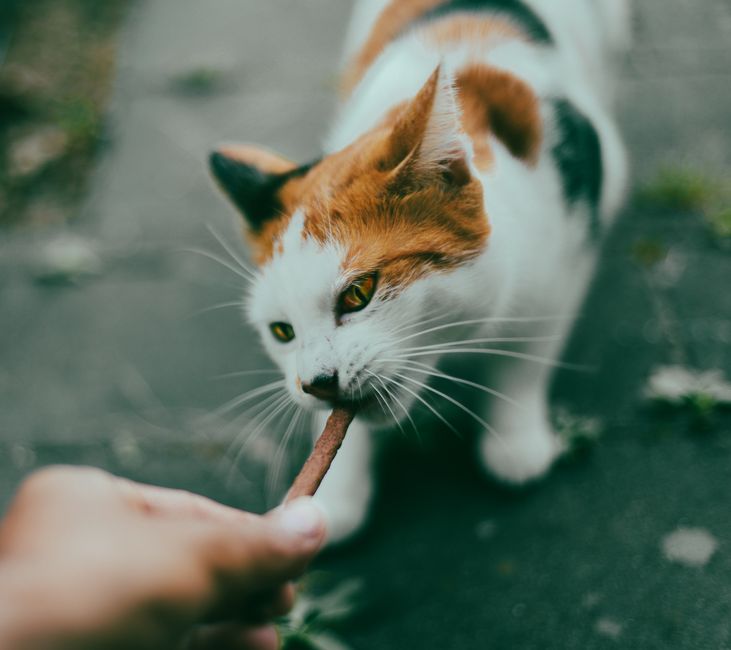
Step 3: Offer something high-value. A pinch of tuna, a piece of chicken, her absolute favorite treat. If she ignores it entirely, that’s meaningful. A cat who won’t take a treat is a cat who feels bad or is extremely shut down with fear.
Step 4: Check the litter box. Has she used it since she started hiding? Any blood, straining evidence, diarrhea, or complete absence of output? In male cats especially, no urine output requires an immediate call to your vet or emergency clinic.
Step 5: Check her gums if she’ll tolerate it. Gently lift the lip. Healthy gums are pink and moist. Press on the gum and release: color should return within 2 seconds. Pale, white, blue, or tacky gums equal emergency.
Step 6: Take her temperature if you can. Normal cat temperature is 100.5 to 102.5 degrees Fahrenheit. Above 104 or below 99 is an emergency. A basic rectal thermometer and a little petroleum jelly is all you need. If your cat won’t allow it, don’t force it; just call your vet.
Step 7: Call your vet with specific information. Don’t just say “she’s hiding.” Tell them how long, what she last ate and drank, whether she’s used the litter box, what her gums look like, and any possible triggers or exposures. Specific information gets you better triage guidance.
Cats communicate by subtraction. They take things away: their presence, their appetite, their sociability. Learning to notice what’s missing is one of the most important skills you can develop as a cat owner, and it gets easier the more you tune into your individual cat’s normal patterns.
If something feels off to you, trust that instinct and make the call. You know your cat better than anyone, and a vet who dismisses your concern is a vet worth questioning.
This article is for general informational purposes only and does not constitute veterinary advice. Pet health symptoms can have many causes and require professional evaluation. Always consult a licensed veterinarian for diagnosis and treatment specific to your pet.
Sources
- FRONTLINE Plus Flea and Tick Treatment for Dogs
- ASPCA Poison Control Center
- this type of puzzle feeder
- Thundershirt Classic Dog Anxiety Jacket
- Arm & Hammer Dog Dental Spray, No Brush Needed
Disclosure: As an Amazon Associate, we earn a small commission from qualifying purchases at no extra cost to you. We only recommend products that genuinely support the topics covered in this article.
- EVERLIT 95-Piece Vet-Approved Pet First Aid Kit (~$32), Vet-approved 95-piece kit for dogs and cats, covers cuts, burns, sprains, and emergencies until you can reach a vet.
- Nutramax Cosequin DS Joint Supplement for Dogs (132ct) (~$36), The #1 veterinarian-recommended joint supplement brand, clinically studied for reducing joint pain in dogs.
- Nutramax Proviable Probiotics for Dogs & Cats (80ct) (~$32), Multi-strain probiotic for both dogs and cats, supports digestive health and immune function.
Recommended Resources
Disclosure: As an Amazon Associate, we earn a small commission from qualifying purchases at no extra cost to you. We only recommend products that genuinely support the topics covered in this article.
- EVERLIT 95-Piece Vet-Approved Pet First Aid Kit (~$32), Vet-approved 95-piece kit for dogs and cats, covers cuts, burns, sprains, and emergencies until you can reach a vet.
- Nutramax Cosequin DS Joint Supplement for Dogs (132ct) (~$36), The #1 veterinarian-recommended joint supplement brand, clinically studied for reducing joint pain in dogs.