 James Whitfield
Your dog just got diagnosed with a torn CCL, and you’re probably staring at an estimate that made your stomach drop. Maybe you’re sitting in the parking lot of the vet clinic right now, or you got the news on the phone and immediately started Googling. Either way, you’re wondering how much this is really going to cost, whether there are cheaper options, and whether your dog is going to be okay. All of those are fair questions. Let me try to answer them honestly.
The cruciate ligament (technically the cranial cruciate ligament, or CCL, in dogs) is the rough equivalent of the ACL in humans. When it tears, it usually means surgery. I’ve seen thousands of post-op dogs come through our clinic doors over the years, and the financial piece is genuinely one of the hardest parts for families. The cost range is wide and can feel random if no one explains why. It’s not random, though. There are real reasons some surgeries cost $3,500 and others cost $7,000+, and I want to walk you through all of it.
One thing I want to say upfront: don’t let price alone drive the decision. I know that sounds easy for me to say. But the surgery type, the surgeon’s experience, and your dog’s recovery environment all matter more than whether you went to the cheapest practice in your area. More on that in a moment.
- Total CCL surgery cost in the US currently ranges from roughly $3,500 to $7,500+ depending on procedure type, location, and your dog's size.
- TPLO is the most common surgery and generally runs $4,500-$6,500 including pre-op workup and basic follow-up.
- A board-certified veterinary surgeon typically charges 30-50% more than a general practice vet, but complication rates differ.
- Pet insurance can cover 70-90% of surgery costs if the injury isn't pre-existing, enroll your dog before problems start.
- "Wait and see" rarely works for complete CCL tears in dogs over 30 lbs; delaying surgery usually means worse joint damage.
What You’re Actually Paying For
The bill you receive isn’t just a surgery fee. By the time you factor in everything, the total usually includes: a pre-surgical orthopedic exam (sometimes $150-$300 separately), radiographs under sedation ($250-$450), the surgery itself, anesthesia monitoring, hospitalization, discharge medications, and at least two follow-up rechecks. Some clinics bundle all of this into one estimate. Others itemize, which can look scarier but isn’t actually more expensive.
The surgery itself is the lion’s share. There are three procedures you’ll most likely hear about: the TPLO (tibial plateau leveling osteotomy), the TTA (tibial tuberosity advancement), and the extracapsular repair (sometimes called the lateral suture or fishing line technique). Each has a different price point and a different body of evidence behind it.
I’ll be direct here: for most medium to large breed dogs, the TPLO has the strongest long-term outcome data, and it’s what I’d choose for my own dog. That’s not a fringe opinion. The American Veterinary Medical Association (AVMA) recognizes it as a leading approach, and the orthopedic surgery literature has pretty consistently shown return-to-function rates above 90% for appropriately selected patients. The extracapsular repair is often cheaper and can work well for small dogs (under 20-25 lbs), but in larger dogs the synthetic suture can stretch or fail over time. I’ve seen that happen. It’s not catastrophic when it does, but it often means a second surgery.
The Numbers, Side by Side
Helpful resource: Arm & Hammer Dog Dental Spray , No Brush Needed is a top-rated option for this. (As an Amazon Associate this site earns from qualifying purchases.)
As of July 2026, here’s what you can generally expect to pay across procedure types and practice settings. These are ranges drawn from current referral center pricing, general practice orthopedic quotes, and regional variation I’ve seen firsthand:
| Procedure | Small Dog (<25 lbs) | Medium Dog (25-60 lbs) | Large Dog (60+ lbs) | Typical Setting |
|---|---|---|---|---|
| Extracapsular (lateral suture) | $1,800-$2,800 | $2,200-$3,500 | $3,000-$4,500 | General practice or GP surgeon |
| TTA | $3,200-$4,500 | $3,800-$5,200 | $4,500-$6,000 | Board-certified or GP surgeon |
| TPLO | $3,500-$5,000 | $4,500-$6,000 | $5,500-$7,500 | Board-certified surgeon preferred |
| TPLO at university teaching hospital | $2,800-$4,200 | $3,500-$5,000 | $4,500-$6,200 | Resident-performed, attending oversight |
These figures include the full episode of care (pre-op imaging through standard follow-up), not just the surgery table fee. They don’t include physical rehabilitation, which is a separate expense worth budgeting for.
Board-Certified Surgeon vs. Your Regular Vet
This is the question I get asked most often, and I think a lot of people expect me to say “it doesn’t matter, just go with whoever’s cheapest.” I’m not going to say that.
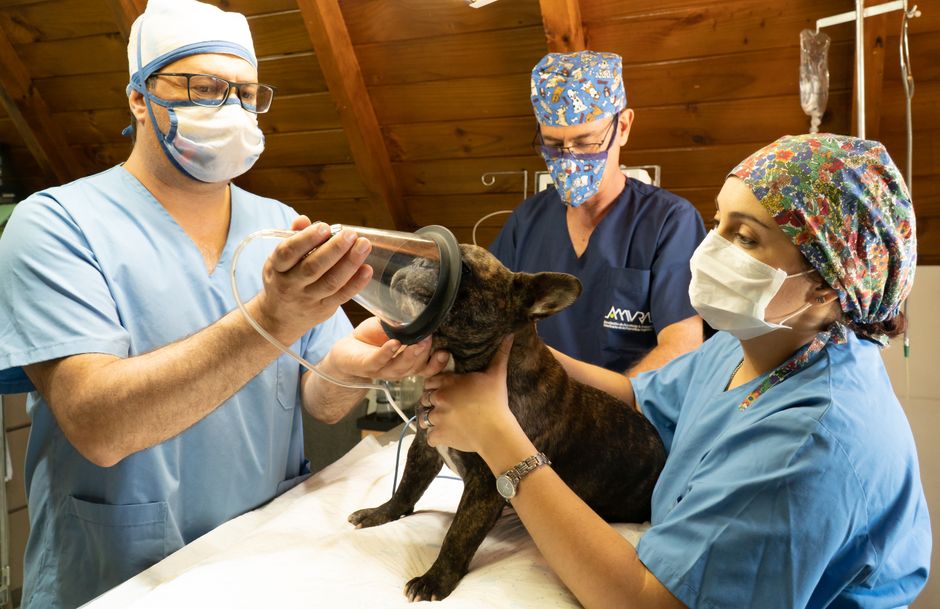
A board-certified veterinary surgeon (diplomate of the American College of Veterinary Surgeons, or ACVS) has completed a three-year residency specifically focused on surgical procedures and passed rigorous board exams. For a TPLO especially, which involves cutting and repositioning the tibia with a bone plate, the margin for technical error matters. Minor differences in the plateau angle cut can affect long-term outcomes significantly.
That said, some general practitioners do excellent orthopedic work, particularly if they’ve done high volume and have good outcomes data to show you. It’s completely fair to ask a GP vet how many TPLOs they do per year and whether they track complication rates. AAHA hospital accreditation standards include quality metrics that can help you gauge a practice’s rigor.
My real-world example: a reader named Priya emailed me in spring 2026 after her 55-lb Labrador mix had a TPLO done at a general practice for $3,200 (notably below average). The dog developed a postoperative infection requiring a second procedure and IV antibiotics. Her total ended up over $6,000. That’s not an indictment of every general practice surgeon, but it illustrates why the cheapest bid sometimes isn’t.
University teaching hospitals are often the best-kept secret in this conversation. Procedures are performed by surgical residents under direct attending supervision. Costs are typically 20-30% lower than private referral centers, and the oversight is usually excellent. If there’s a veterinary school within two to three hours of you, it’s worth calling.
The Insurance Reality (And When It’s Too Late)
Pet insurance can change everything here. A policy through Trupanion, Healthy Paws, or Figo typically covers 70-90% of eligible surgery costs after the deductible, which can turn a $6,000 bill into $900-$1,200 out of pocket. For a breed like a Labrador, Golden Retriever, Rottweiler, or Newfoundland (all statistically high-risk for CCL tears), having insurance before age three to four is one of the most financially protective things you can do.
The catch, and it’s a hard one: if your dog has already been diagnosed with a CCL injury, any insurer will exclude it as a pre-existing condition. Some will also exclude the other knee, because bilateral CCL disease is extremely common (roughly 40-50% of dogs who tear one CCL will eventually tear the other). If you’re past that point, insurance won’t help with this injury, but it’s still worth getting if you haven’t for everything else going forward.
Scenario: Buster, a 70-lb Goldendoodle, enrolled in a Healthy Paws plan at age 2. At age 5 he tore his CCL. Surgery cost $6,340 at a specialty hospital. After the $500 deductible and 10% copay, his owner paid $1,134 out of pocket. Without insurance, that same bill stays at $6,340.
If you’re uninsured right now and facing the cost, CareCredit is widely accepted at veterinary practices and offers 6-12 month interest-free periods (read the fine print on deferred interest, though). Some specialty hospitals have payment plans directly. It’s always worth asking.
Recovery Costs People Forget to Budget
Surgery is not the end of the spending. Rehabilitation therapy (underwater treadmill, range-of-motion exercises, laser therapy) runs roughly $60-$120 per session, and a standard post-TPLO rehab protocol is usually 8-12 sessions over 10-12 weeks. That’s another $700-$1,400 on top of surgery. It’s genuinely worth it. Dogs who complete formal rehab return to full function faster and have lower rates of the muscle atrophy that leads to long-term lameness.
You’ll also need: a baby gate or x-pen to restrict activity ($40-$80), an orthopedic recovery crate if you don’t have one, a non-slip mat for every hard floor in your house (trust me on this one, I learned the hard way after a post-op patient slipped in my own home on tile), and typically 4-6 weeks of pain and anti-inflammatory medications around $30-$60/month.
The eight-week strict rest period is the hardest part for most owners. Not because of money, but because your dog won’t understand why they can’t run. That part’s free, but it costs something.
Sources
- American College of Veterinary Surgeons (ACVS): Official guidelines on CCL disease management, TPLO and TTA indications, and surgeon credentialing.
- American Veterinary Medical Association (AVMA): Peer-reviewed resources on canine orthopedic conditions and treatment standards.
- AAHA Canine Life Stage Guidelines: Hospital accreditation standards and orthopedic care quality metrics.
- Lafaver S, et al. “Tibial plateau leveling osteotomy vs. tibial tuberosity advancement: outcome comparison in 202 dogs.” Veterinary Surgery, 2007 (foundational comparative outcomes data, still widely cited).
- Wucherer KL, et al. “Short-term and long-term outcomes for overweight dogs with cranial cruciate ligament rupture treated surgically or nonsurgically.” JAVMA, 2013.
Photo: Tima Miroshnichenko via Pexels
This article is for general informational purposes only and does not constitute veterinary advice. Pet health symptoms can have many causes and require professional evaluation. Always consult a licensed veterinarian for diagnosis and treatment specific to your pet.
Recommended Resources
Disclosure: As an Amazon Associate, we earn a small commission from qualifying purchases at no extra cost to you. We only recommend products that genuinely support the topics covered in this article.
- EVERLIT 95-Piece Vet-Approved Pet First Aid Kit (~$32), Vet-approved 95-piece kit for dogs and cats, covers cuts, burns, sprains, and emergencies until you can reach a vet.
- Nutramax Cosequin DS Joint Supplement for Dogs (132ct) (~$36), The #1 veterinarian-recommended joint supplement brand, clinically studied for reducing joint pain in dogs.