 Dr. Amanda Foster
Your dog’s been shaking his head for two days straight. You notice him pawing at his left ear, and when you lean in close, there’s a smell that stops you cold. You’re not imagining it. That’s almost certainly an ear infection, and if you’ve never dealt with one before, the combination of symptoms can feel alarming.
Here’s the thing: ear infections are one of the most common reasons dogs visit the vet. According to the American Veterinary Medical Association (AVMA), otitis externa (infection of the outer ear canal) accounts for a significant portion of all small animal veterinary visits. Knowing what you’re looking at, when you need to move fast, and how treatment actually works will help you act confidently instead of spiraling into 2 a.m. Google panic.
What Ear Infections Actually Look Like in Dogs
The head shaking and pawing are usually the first things owners notice, but the full picture is worth knowing. Ear infections don’t always announce themselves dramatically.
Behavioral signs:
- Persistent head shaking or tilting the head to one side
- Pawing, scratching, or rubbing the ear against furniture or carpet
- Whimpering or pulling away when the ear is touched
- Seeming off-balance or walking in circles (this is less common but serious when it happens)
Physical signs you can see:
- Redness or swelling inside the ear flap or at the canal opening
- Dark brown, yellow, or black discharge
- Waxy buildup that looks different from your dog’s normal baseline
- Visible crusting around the ear opening
- Hair loss around the ear from constant scratching
The smell. I can’t overstate this. A healthy ear has almost no odor, or maybe a very faint, neutral scent. An infected ear often smells yeasty (think: bread or corn chips), foul and musty, or in bacterial infections, sometimes frankly putrid. If you’re hit with a smell when you look in your dog’s ear, that’s enough reason to call your vet.
One thing that trips people up: some dogs have chronic, low-grade infections that build slowly. The dog’s learned to live with mild discomfort, and the owner doesn’t notice until discharge shows up on the pillow or furniture. A once-a-week ear check during grooming takes 30 seconds and catches these early.
What’s Actually Causing the Infection
Not all ear infections are the same, and this matters for treatment. Three main culprits: yeast, bacteria, and ear mites. Sometimes you get a combination.
Yeast (Malassezia) is the most common offender, especially in dogs with floppy ears, allergies, or dogs that swim frequently. Yeast love warm, dark, moist environments, and a floppy ear that traps humidity is basically a resort for them. The discharge tends to be brown and waxy, and that corn-chip smell is the giveaway.
Bacteria can cause infections on their own or pile in after yeast creates inflammation that compromises the ear’s natural defenses. Bacterial infections often produce more discharge, more pain, and more severe redness. Pseudomonas is a particularly stubborn bacterial culprit in chronic or recurring cases.
Ear mites (Otodectes cynotis) are more common in puppies and in cats (who can pass them to dogs in multi-pet households). The discharge looks like dark, dry, crumbly coffee grounds. Dogs with mites tend to scratch intensely, and you may see tiny white dots of live mites if you look closely with good lighting, though they’re small enough to miss.
Underlying causes matter enormously. Most ear infections don’t just happen in a vacuum. Dogs that get recurring infections almost always have an underlying driver: environmental allergies, food sensitivities, hypothyroidism, or an anatomical quirk like very narrow ear canals. Treating the infection without addressing the root cause is like mopping up a leaky sink without turning off the faucet.
When It’s an Emergency vs. When It Can Wait
This is the section I know you actually need, so let me be direct.
Go to an emergency vet or call your vet immediately if you see:
- Head tilting combined with loss of balance, stumbling, or falling. This can signal a middle or inner ear infection, which is a different, more serious situation.
- Facial drooping on the same side as the affected ear (can indicate nerve involvement)
- A dog that won’t let you near the ear at all because the pain is that severe
- Swelling that looks like a soft, fluid-filled bubble on the ear flap. That’s an aural hematoma, which usually needs same-day or next-day veterinary attention.
- Any of the above symptoms in a dog that also seems systemically unwell (lethargic, not eating, vomiting)
This can usually wait until a regular appointment:
- Mild head shaking that started within the last 24-48 hours
- Slight redness with a small amount of dark discharge, no strong odor, and the dog is still comfortable being handled
- A dog that’s scratching occasionally but isn’t in obvious distress
The gray zone: If your dog is clearly uncomfortable but not in the “emergency” category above, most clinics appreciate a same-day call. Describe the smell, discharge color, how long it’s been going on, and whether the dog is eating and acting normally otherwise. That gives the staff enough to triage appropriately.
One hard truth: don’t put anything in your dog’s ear canal before a vet examines it. Not hydrogen peroxide, not olive oil, not diluted vinegar. If the eardrum is ruptured (which you can’t diagnose at home), introducing any liquid can cause serious damage. Leave the canal alone.
How Ear Infections Are Diagnosed and Treated
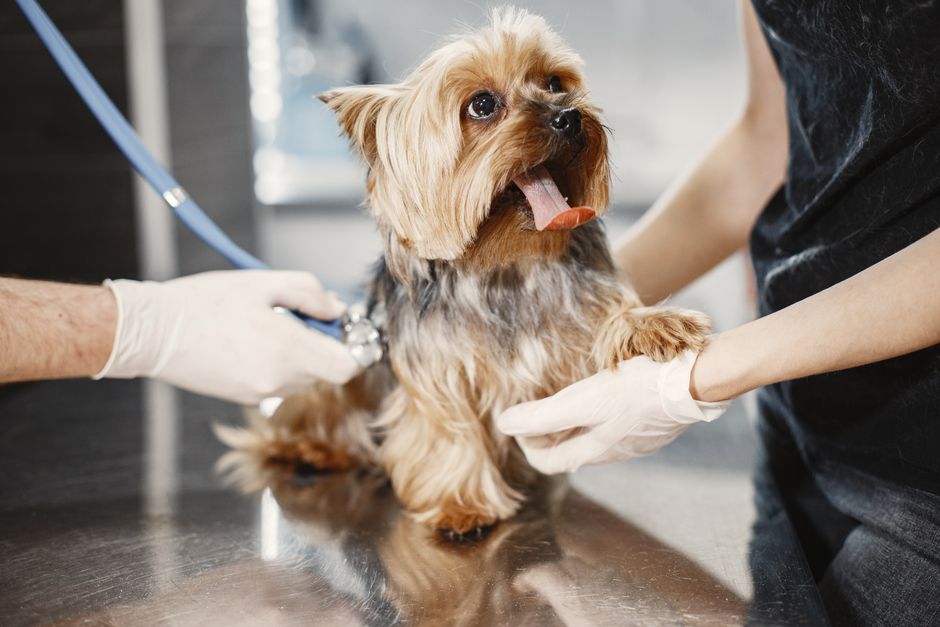
When your vet looks in your dog’s ear, they’re not just eyeballing it. They’ll use an otoscope to visualize the canal and check eardrum integrity. The key diagnostic step is a cytology swab: they’ll take a sample from the ear, stain it, and look at it under a microscope. This tells them within minutes whether they’re dealing with yeast, bacteria, or both, and in what proportions. For chronic or stubborn infections, they may send a culture out to identify exactly which bacteria are present and which antibiotics will work against them.
Typical treatment for a standard outer ear infection:
- In-clinic cleaning: The vet or tech will flush and clean the ear canal thoroughly. This removes the debris that the topical medication needs to penetrate through.
- Topical medication: Most uncomplicated infections are treated with a prescription topical ointment or solution applied directly into the ear canal. Common options contain a combination of an antifungal (like clotrimazole), an antibiotic (like gentamicin), and a corticosteroid to reduce inflammation. Some formulations are a one-time in-clinic application designed to last 7-14 days. Others are applied at home once or twice daily.
- Oral medications: For moderate to severe infections, or when there’s significant pain and inflammation, your vet may add oral antibiotics or a short course of oral steroids.
- At-home cleaning: Your vet will likely recommend cleaning the ear with a veterinary ear cleanser during treatment. Ask them to show you the technique before you leave the clinic.
A practical at-home ear cleaning technique (for dogs already seen by a vet):
- Use only veterinary-formulated ear cleaner. Never use water alone.
- Hold the ear flap up gently to straighten the canal.
- Fill the canal with cleaner until it looks full.
- Massage the base of the ear (the cartilaginous part at the bottom) firmly for 20-30 seconds. You should hear a squelching sound.
- Let your dog shake. Yes, it’s messy. That’s the point.
- Wipe the visible part of the canal and the ear flap with a cotton ball or gauze. Never use Q-tips down the canal.
- Wait 5-10 minutes before applying any prescription ear drops.
Treatment duration for a first-time, uncomplicated infection is typically 7-14 days. Recheck cytology at the end of treatment confirms the infection is actually cleared, not just quiet. Skipping that recheck is how chronic infections start.
Prevention: What Actually Works
Keeping ear infections from coming back is about addressing risk factors, not magic.
For water-loving dogs: Dry the ears thoroughly after swimming or bathing. Tilt the head, use a cotton ball to absorb moisture from the outer canal, and consider a drying ear solution post-swim. Ask your vet to recommend one.
For allergy dogs: This is the big one. If your dog gets ear infections repeatedly (more than twice a year), allergies are almost certainly involved. Working up the underlying allergy with your vet, whether through diet trials, allergy testing, or immunotherapy, will do more for your dog’s ear health than any cleaning routine alone.
Routine maintenance cleaning: For dogs prone to buildup, a weekly or biweekly cleaning with a gentle veterinary ear cleanser can help prevent the environment where yeast and bacteria thrive. Don’t over-clean in a dog with normal, healthy ears. That can actually strip protective wax and irritate the canal.
Keep hair around the ear opening trimmed if your dog has heavy furnishings that trap moisture and debris.
Ear infections are uncomfortable and sometimes painful for your dog, but they’re genuinely treatable when caught and addressed correctly. The difference between a dog that clears up cleanly after one round of treatment and a dog that cycles through infections for years usually comes down to how thoroughly the first infection was worked up and whether the follow-through happened. Take the recheck seriously. Address the underlying cause if your vet identifies one. Trust your nose: if the ear smells wrong, something is wrong.
This article is for general informational purposes only and does not constitute veterinary advice. Pet health symptoms can have many causes and require professional evaluation. Always consult a licensed veterinarian for diagnosis and treatment specific to your pet.
Sources
- American Veterinary Medical Association (AVMA)
- Arm & Hammer Dog Dental Spray, No Brush Needed
- Thundershirt Classic Dog Anxiety Jacket
- FRONTLINE Plus Flea and Tick Treatment for Dogs
- Anna Shvets
Disclosure: As an Amazon Associate, we earn a small commission from qualifying purchases at no extra cost to you. We only recommend products that genuinely support the topics covered in this article.
- EVERLIT 95-Piece Vet-Approved Pet First Aid Kit (~$32). Vet-approved 95-piece kit for dogs and cats, covers cuts, burns, sprains, and emergencies until you can reach a vet.
- Nutramax Cosequin DS Joint Supplement for Dogs (132ct) (~$36). The #1 veterinarian-recommended joint supplement brand, clinically studied for reducing joint pain in dogs.
Recommended Resources
Disclosure: As an Amazon Associate, we earn a small commission from qualifying purchases at no extra cost to you. We only recommend products that genuinely support the topics covered in this article.
- EVERLIT 95-Piece Vet-Approved Pet First Aid Kit (~$32), Vet-approved 95-piece kit for dogs and cats, covers cuts, burns, sprains, and emergencies until you can reach a vet.
- Nutramax Cosequin DS Joint Supplement for Dogs (132ct) (~$36), The #1 veterinarian-recommended joint supplement brand, clinically studied for reducing joint pain in dogs.