 Rachel Sanders
Your dog woke up with one eye crusted shut and now you’re standing in the bathroom at 7 a.m. trying to decide if this is a “rush to the emergency vet” situation or a “wait until Monday” situation. I’ve had that exact call made to me dozens of times. The answer depends on a few specific things, and I’ll walk you through all of them.
First, the honest version of what you’re dealing with: dog eye infections range from genuinely minor (a little conjunctivitis that clears up with a week of antibiotic drops) to vision-threatening emergencies (a corneal ulcer or glaucoma that needs treatment within hours). Most pet owners can’t tell the difference at a glance. That’s not a failing. Even I’ll look at a photo and want to examine the eye before committing to an opinion.
Here’s what I’ll say upfront: if your dog’s eye is bulging, if the cornea looks cloudy or blue, if your dog is pawing at it constantly or squinting hard in normal light, stop reading and go now. Don’t wait for morning. Don’t call the regular vet who opens at 8. Those specific signs point to conditions where a few hours genuinely matter.
Everything else? Let’s work through it.
What’s Actually Causing That Gunky Eye
“Eye infection” is a catch-all that covers several different problems, and the treatment varies depending on which one you’ve got.
Bacterial conjunctivitis is the most common and what most people picture: red, irritated whites of the eye, yellow or green discharge, maybe some crusting around the lids. It’s uncomfortable but not usually dangerous. It almost always needs antibiotic eye drops or ointment from your vet. You can’t treat a bacterial infection with saline rinses alone, even though rinsing helps with comfort.
Viral conjunctivitis looks similar but is often associated with an upper respiratory bug. It tends to produce clearer, more watery discharge rather than thick yellow-green gunk. In healthy adult dogs it often resolves on its own, but your vet should still confirm that’s what you’re dealing with.
Dry eye (keratoconjunctivitis sicca, or KCS) is frequently misdiagnosed as a simple infection. The discharge tends to be mucoid and stringy rather than watery, and it recurs constantly because the underlying problem is inadequate tear production, not bacteria. This one needs specific treatment (usually cyclosporine or tacrolimus drops) and lifetime management. The American Veterinary Medical Association flags it as one of the more underdiagnosed chronic eye conditions in dogs, particularly in Cocker Spaniels, Shih Tzus, and Bulldogs.
Foreign bodies, allergies, and blocked tear ducts can all mimic infections too. This is why a diagnosis matters.
What You Can Do at Home Before the Vet Visit
Helpful resource: Midwest Homes Folding Metal Dog Crate is a top-rated option for this. (As an Amazon Associate this site earns from qualifying purchases.)
Here’s where I’ll give you the real answer instead of the liability-hedged one: there are a few things you can safely do at home while you’re waiting for a vet appointment, and one big thing you shouldn’t do.
You can flush the eye gently with sterile saline. Plain preservative-free saline solution, the same kind sold for contact lens users, works fine. Hold your dog’s head steady, and let a stream of it run from the inner corner outward. This removes debris and discharge and provides some relief. Do this two or three times a day while you wait. A proper pet eye wash like Vetericyn Plus (affiliate link, and yes, the site earns a small commission if you use it) is even better because it’s pH-balanced for eyes and gentle enough to use regularly.
You can use a warm, damp cloth to soften and wipe away crusty discharge. Don’t scrub. Just let the warmth do the work and then wipe gently outward.
What you should not do: don’t reach into your medicine cabinet for leftover human eye drops or antibiotic ointments. Neomycin-containing ointments meant for skin can damage the cornea. And please don’t use any drop containing steroids unless your vet has specifically told you to. Steroids on a corneal ulcer can cause catastrophic, irreversible damage within days. I’ve seen it. It’s heartbreaking.
What the Vet Is Actually Going to Do (So You’re Not Surprised)
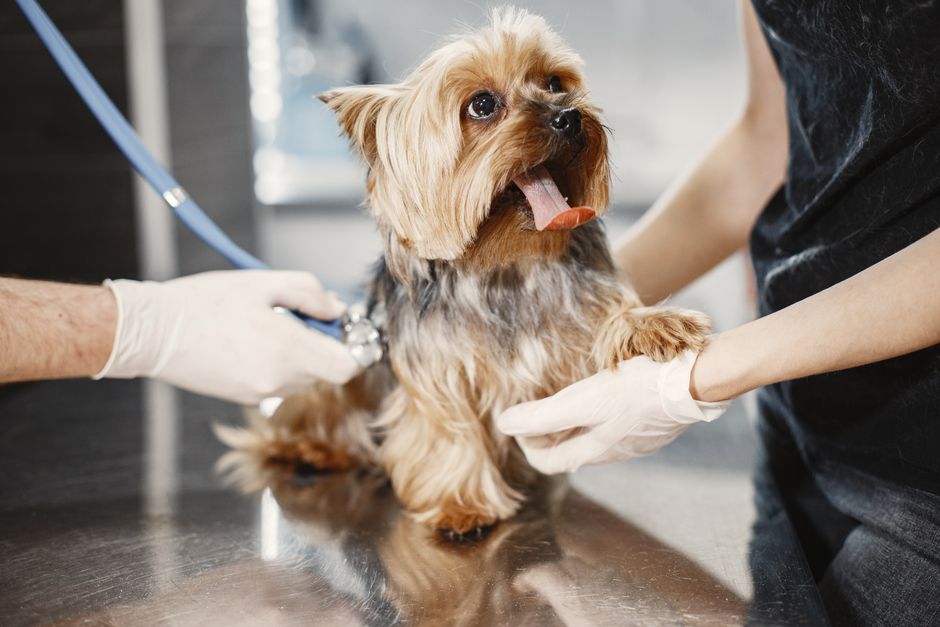
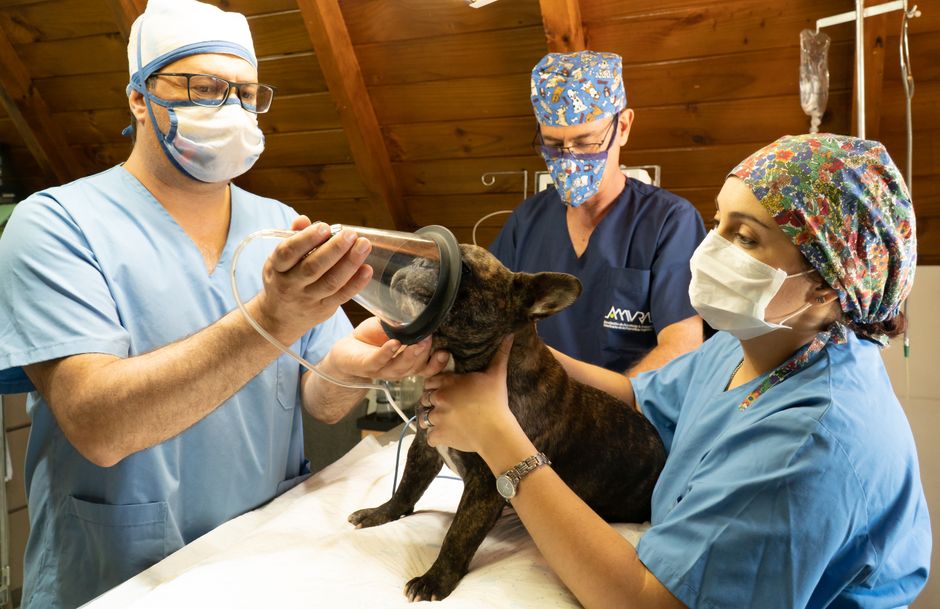
Most eye exams start with a fluorescein stain test. It sounds fancy but it’s just an orange dye that sticks to damaged corneal tissue and glows under a blue light. This rules out ulcers, which completely changes the treatment plan. Your vet should always do this before prescribing anything.
They’ll likely check tear production (Schirmer tear test) and may check intraocular pressure if glaucoma is a concern. The whole exam usually takes 10 to 15 minutes.
From there, bacterial conjunctivitis typically gets treated with topical antibiotic drops or ointment (neomycin-polymyxin-bacitracin combinations are common, or tobramycin for more resistant cases) applied three to four times daily for 7 to 10 days. If there’s a corneal ulcer, the protocol changes and may include more frequent dosing, an e-collar, and a recheck in 5 to 7 days. PetMD’s veterinary resource library has a solid overview of how different eye conditions are staged and treated if you want to go deeper on the pharmacology.
One thing most people don’t realize: getting the drops in correctly matters enormously. You’re not dropping them onto the eyeball, you’re pulling the lower lid down gently to create a small pocket and dropping them in there. Aim for the inner corner. A lot of owners think the medication isn’t working when actually it’s been rolling off the outside of the eye for a week.
Breeds That Need Extra Attention
Flat-faced dogs (Pugs, French Bulldogs, Boston Terriers, Bulldogs) have eyes that protrude and don’t close fully during sleep. They’re prone to chronic irritation, corneal injuries, and something called “pigmentary keratitis,” where dark pigment slowly creeps across the cornea over time due to repeated irritation. If you have a brachycephalic dog with recurring eye discharge, it’s worth a conversation specifically about long-term eye health, not just treating each episode as a one-off.
Large, floppy-eared dogs and those with lots of facial skin folds (Basset Hounds, Shar Peis) deal with their own set of structural issues. Entropion, where the eyelid rolls inward so the lashes scratch the cornea constantly, is painful and gets mistaken for simple infections all the time.
The good news is that most dog eye infections, caught at a reasonable stage and treated properly, resolve completely and quickly. The key is knowing what warrants urgency, what to do while you wait, and how to actually get those drops in correctly once you have them. You’ve got all three now.
This article is for general informational purposes only and does not constitute veterinary advice. Pet health symptoms can have many causes and require professional evaluation. Always consult a licensed veterinarian for diagnosis and treatment specific to your pet.
Sources
- American Veterinary Medical Association
- Midwest Homes Folding Metal Dog Crate
- pet eye wash like Vetericyn Plus
- PetMD’s veterinary resource library
- Nylabone Power Chew Durable Dog Chew Toys
Disclosure: As an Amazon Associate, we earn a small commission from qualifying purchases at no extra cost to you. We only recommend products that genuinely support the topics covered in this article.
- EVERLIT 95-Piece Vet-Approved Pet First Aid Kit (~$32), Vet-approved 95-piece kit for dogs and cats, covers cuts, burns, sprains, and emergencies until you can reach a vet.
- Nutramax Cosequin DS Joint Supplement for Dogs (132ct) (~$36), The #1 veterinarian-recommended joint supplement brand, clinically studied for reducing joint pain in dogs.
Recommended Resources
Disclosure: As an Amazon Associate, we earn a small commission from qualifying purchases at no extra cost to you. We only recommend products that genuinely support the topics covered in this article.
- EVERLIT 95-Piece Vet-Approved Pet First Aid Kit (~$32), Vet-approved 95-piece kit for dogs and cats, covers cuts, burns, sprains, and emergencies until you can reach a vet.
- Nutramax Cosequin DS Joint Supplement for Dogs (132ct) (~$36), The #1 veterinarian-recommended joint supplement brand, clinically studied for reducing joint pain in dogs.