 Rachel Sanders
Ringworm is one of those diagnoses that makes pet owners visibly relax when I say the name, because it sounds manageable. Then I tell them it’s a fungal infection that can live on surfaces in their home for 18 months and spreads readily to humans, and the relaxation disappears fast.
Good. It should. Not because ringworm is deadly (it’s not), but because the casual attitude most people have about it leads to drawn-out, expensive treatment courses and entire households getting infected. The more you understand about how this thing actually behaves, the faster you’ll get through it.
One thing I’ll say upfront: ringworm is one of the most consistently mismanaged conditions I see come through the door. Owners stop treatment too early, skip the environmental decontamination entirely, and then wonder why their cat is still losing patches of fur two months later.
- Ringworm is caused by a fungus (usually Trichophyton or Microsporum), not a worm.
- Cats are far more commonly infected than dogs; longhaired breeds and kittens under 1 year are highest risk.
- Treatment typically runs 6-12 weeks; stopping early is the single most common reason it comes back.
- Environmental decontamination is non-negotiable, the fungus survives on surfaces for up to 18 months.
- It's a zoonotic infection: you, your kids, and other pets in the home can all contract it.
What You’re Actually Dealing With
“Ringworm” is a nickname for dermatophytosis, a fungal infection caused by one of a few species, most commonly Microsporum canis in cats and dogs. The name comes from the circular, ring-shaped lesions it tends to create on human skin. There’s no worm involved anywhere.
The fungus infects the keratin in hair, nails, and the outer layers of skin. It spreads by direct contact with an infected animal, or by contact with spores that have shed into the environment on hair, dander, and skin cells. A single infected cat can deposit spores on every surface it touches. Grooming tools, bedding, furniture, carpet fibers, and HVAC filters can all harbor viable spores.
What catches people off guard is that an animal can be a carrier without showing any obvious signs. Persians and other longhaired cats are notoriously good at carrying M. canis asymptomatically, which is why shelter intake environments often do fungal cultures on every longhaired cat regardless of visible symptoms. I’ve seen cats pass full visual inspection and still culture positive.
Dogs get ringworm too, but it’s genuinely less common. When they do, the presentation is usually similar to cats: patchy hair loss, sometimes with a scaly or crusty border, most often on the face, ears, paws, or along the tail.
Spotting It: What Ringworm Actually Looks Like (and What It Doesn’t)
Helpful resource: FRONTLINE Plus Flea and Tick Treatment for Dogs is a top-rated option for this. (As an Amazon Associate this site earns from qualifying purchases.)
Here’s where most articles fail you: they describe the classic textbook lesion, a neat circular patch of hair loss with a slightly red, scaly ring. That does happen. It’s also not always what you see.
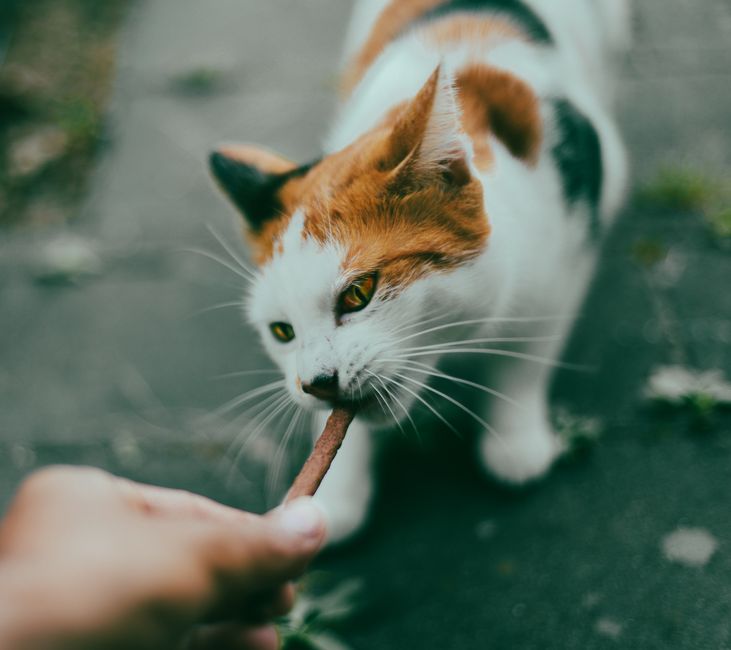
In cats, the lesions are often irregular rather than perfectly circular. You might notice small, broken hairs, a moth-eaten look to the coat, or dry, flaky skin patches that look more like dandruff or mild seborrhea than anything alarming. Kittens tend to show more dramatic lesions because their immune systems aren’t fully developed. I’ve seen kittens under eight weeks old with involvement over most of their face and forelimbs.
The most common locations in cats: the face, ears, and dorsal (top) surface of the paws. In dogs, similar distribution, with the muzzle and feet being frequent sites.
What you should not do: assume the circular shape confirms it or rules it out. Ringworm can mimic mange, bacterial folliculitis, allergic skin disease, and even flea bite hypersensitivity. The reverse is also true: some of those conditions look ringworm-like. Diagnosis by appearance alone is unreliable enough that I’d never personally bank on it.
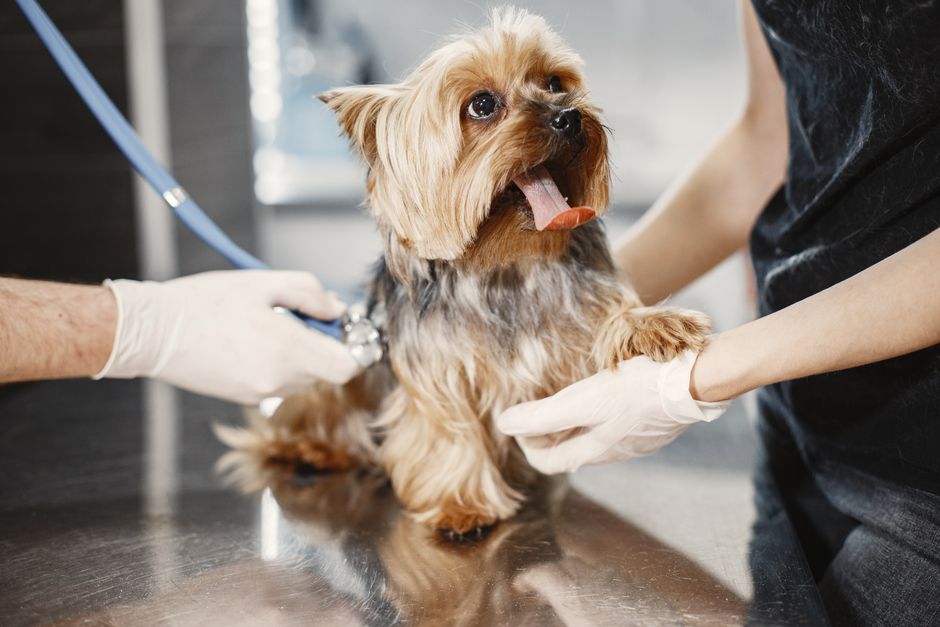
Diagnosis is done by your vet, not by you. The tools they’ll use:
A Wood’s lamp (black light) causes some strains of M. canis to fluoresce a characteristic apple-green color. It’s fast and useful but not definitive; only about 50% of M. canis strains fluoresce, and other debris can also fluoresce. A negative Wood’s lamp does not rule out ringworm.
Direct microscopy (examining hair under a microscope) is faster than a culture but requires a skilled eye and can miss infections.
Fungal culture is the gold standard. Hair and scale samples are plated on dermatophyte test medium (DTM) and monitored for up to 21 days. It’s slow (I tell owners to expect roughly two weeks before we have a confident result), but it identifies the specific organism and confirms the diagnosis. If you’re about to start a multi-week treatment protocol, you want to know what you’re actually treating.
Treatment: What Actually Works
Understanding Bloat in Dogs: Causes, Warning Signs & How to Prevent It! · American Standard Dog Training on YouTube
There’s no shortcut here. Ringworm treatment is a commitment.
The standard approach combines systemic antifungal medication with topical therapy and aggressive environmental decontamination. Doing only one or two of these three things is why most treatment failures happen. I’ve had this conversation with clients a hundred times.
Systemic medication for cats is most often itraconazole (Itrafungol, the FDA-approved oral solution for cats, currently costs roughly $80-150 per two-week supply depending on your pharmacy and the cat’s weight) or terbinafine as an off-label option. For dogs, griseofulvin, itraconazole, or terbinafine are the main choices. Your vet will prescribe based on species, weight, liver function, and what else is going on with your pet. Treatment typically runs 6 to 12 weeks, and the decision to stop should be based on two consecutive negative fungal cultures, not just visual resolution. Lesions can look healed while the animal is still shedding spores.
Topical treatment runs parallel to the oral medication. Twice-weekly whole-body lime sulfur dips are the most effective option, and yes, they smell exactly as bad as you’re imagining. Lime sulfur solution smells like rotten eggs and will stain anything it touches, including your grout and your tub. The alternative with reasonable evidence behind it is a twice-weekly antifungal shampoo containing miconazole and chlorhexidine, such as Malaseb shampoo (around $20-30 for 12 oz). It’s less potent than lime sulfur but dramatically easier to live with, and the American Veterinary Medical Association (AVMA) has published guidelines supporting its use in combination protocols.
Clipping longhaired cats can help the topical treatments reach the skin more effectively, though this is somewhat controversial (clipping can spread spores if you’re not careful) and should be discussed with your vet.
| Treatment Component | Options | Frequency | Notes |
|---|---|---|---|
| Systemic antifungal | Itraconazole, terbinafine, griseofulvin | Daily or every other day (varies) | 6-12 weeks typical; stop based on culture, not appearance |
| Topical dip | Lime sulfur solution (1:32 dilution) | Twice weekly | Most effective option; strong odor, stains surfaces |
| Topical shampoo | Miconazole/chlorhexidine (e.g., Malaseb) | Twice weekly, 5-10 min contact time | More practical for long-term use; less potent than lime sulfur |
| Environmental cleaning | Diluted bleach (1:10), antifungal surface sprays | Daily to every few days | Carpets and porous surfaces are the hardest to decontaminate |
| Monitoring | Fungal culture (DTM) | Every 2-4 weeks | Two consecutive negatives before stopping treatment |
The Environmental Piece Most People Skip
This is where I see people fail completely. You can medicate your cat perfectly and reinfect them from your couch in week three.
Spores shed in the environment remain infective for a long time, up to 18 months under the right conditions. Vacuum frequently (seal and discard bags immediately after), wash bedding in hot water with a cup of bleach if the fabric can tolerate it, and wipe hard surfaces with a 1:10 dilute bleach solution. HEPA air filtration actually helps since spores are airborne. Foam furniture and carpets are genuinely difficult to fully decontaminate; for severe infections in carpeted homes, some vets recommend restricting the infected animal to hard-floor areas during treatment.
Grooming tools should either be soaked in dilute bleach between uses or discarded. I know that sounds extreme for a $15 brush, but it’s cheaper than treating a second round.
If you have multiple pets, isolating the infected individual matters. Healthy adult cats and dogs with intact immune systems often resist infection, but kittens, elderly animals, and immunocompromised pets are at real risk. Test and culture all animals in the household regardless of symptoms.
The Zoonotic Reality
You can get this from your cat. That’s not fearmongering; it’s a practical fact. Human ringworm (called tinea corporis when it’s on the body, tinea capitis on the scalp) looks like the classic circular, itchy, scaling patch that gives the disease its name. It’s treated with over-the-counter antifungal creams like clotrimazole (Lotrimate AF) in most cases, though scalp infections require oral antifungals and a physician visit.
If anyone in your household develops a suspicious skin lesion during treatment of your pet, see a doctor. PetMD’s veterinary resource library has a solid overview of ringworm transmission dynamics if you want the full picture on risk factors for household spread.
Children, elderly adults, and immunocompromised people are at higher risk of contracting it and having a more severe course. This isn’t a reason to panic, but it is a reason to be diligent with handwashing after handling the infected animal and with decontaminating surfaces.
Real Outcomes: What to Expect
A scenario I see repeatedly: a single adult cat, adopted from a shelter, presents at 5 months old with two small circular lesions on the face and ear. Owner opts for itraconazole oral solution plus twice-weekly Malaseb baths and diligent daily bleach wipes of hard floors. First follow-up culture at week four is still positive. Second culture at week eight is negative. Third culture at week ten is negative. Treatment stopped. Total cost including diagnosis, medication, and shampoo: approximately $340 over ten weeks. No household members infected.
Contrast that with a case from a reader who emailed me last spring: three cats in a household, discovered ringworm in one, treated only that cat, stopped treatment at week four when lesions resolved visually. Culture never done post-treatment. Six weeks later, all three cats were symptomatic, the owner had a lesion on her forearm, and the restarted treatment course cost her over $800 including the dermatology visit for herself.
A third common scenario: a puppy in a litter of five tests positive on intake exam at a rescue. Entire litter treated prophylactically with lime sulfur dips twice weekly for eight weeks, adopters notified. Zero cases in adoptive homes. Rescue’s protocol, which I’ve seen replicated at several well-run shelters, prevents the nightmare of calling thirty adopters to tell them their new puppy has a contagious skin fungus.
Sources
- American Veterinary Medical Association (AVMA): Dermatophytosis guidelines and zoonotic disease fact sheets
- Moriello KA, et al. (2017), Veterinary Dermatology: “Diagnosis and treatment of dermatophytosis in dogs and cats” – the current clinical consensus paper, still the most-cited reference in this area
- PetMD veterinary resource library: Ringworm transmission and household management overview, reviewed by licensed veterinarians
- Sparkes AH, et al., Journal of Small Animal Practice: Studies on itraconazole pharmacokinetics in cats and treatment duration
- Cornell Feline Health Center: Practical feline ringworm resources with shelter-specific protocols
Photo: Mahmoud Yahyaoui via Pexels
This article is for general informational purposes only and does not constitute veterinary advice. Pet health symptoms can have many causes and require professional evaluation. Always consult a licensed veterinarian for diagnosis and treatment specific to your pet.
Recommended Resources
Disclosure: As an Amazon Associate, we earn a small commission from qualifying purchases at no extra cost to you. We only recommend products that genuinely support the topics covered in this article.
- EVERLIT 95-Piece Vet-Approved Pet First Aid Kit (~$32), Vet-approved 95-piece kit for dogs and cats, covers cuts, burns, sprains, and emergencies until you can reach a vet.
- Nutramax Cosequin DS Joint Supplement for Dogs (132ct) (~$36), The #1 veterinarian-recommended joint supplement brand, clinically studied for reducing joint pain in dogs.