 Rachel Sanders
Cats are brilliant liars.
That sounds harsh, but it’s genuinely the most important thing I can tell you before we get into any of the specifics. After 13 years of handling sick and injured animals, the cases that haunt me aren’t the obvious ones, the dog hit by a car or the cat with a dangling limb. The cases that haunt me are the cats who sat quietly in a sunny spot for three weeks while their owners thought they were “just being mellow,” only to come in with a dental abscess the size of a marble or a urinary blockage that had been building for days. Prey animals hide pain. It’s wired into them. Which means by the time your cat is obviously suffering, things are often already pretty bad.
I don’t say that to scare you. I say it because recognizing the subtle stuff early is genuinely the difference between a $300 vet visit and a $2,000 emergency hospitalization. So let’s get into what to actually look for.
- Cats instinctively hide pain; subtle behavioral changes often appear days before obvious symptoms.
- Facial tension (squinted eyes, flattened whiskers, ears rotated back) is one of the earliest and most reliable pain indicators in cats.
- Reduced grooming, appetite changes, and hiding are more significant pain signals than vocalization in most cats.
- A cat who stops jumping or changes how it moves warrants a vet call within 24-48 hours, not a "wait and see" approach.
- Sudden aggression in a previously calm cat is a pain response until proven otherwise.
The Face Tells You More Than You Think
Here’s something I genuinely didn’t know early in my career: there’s a validated pain assessment tool for cats called the Feline Grimace Scale, developed by researchers at the Université de Montréal. It’s based on five facial action units, and it’s remarkably accurate. I mention it not because you need to memorize it, but because it confirms what experienced techs and vets have observed for years: the face is where cats leak information they’re otherwise working hard to suppress.
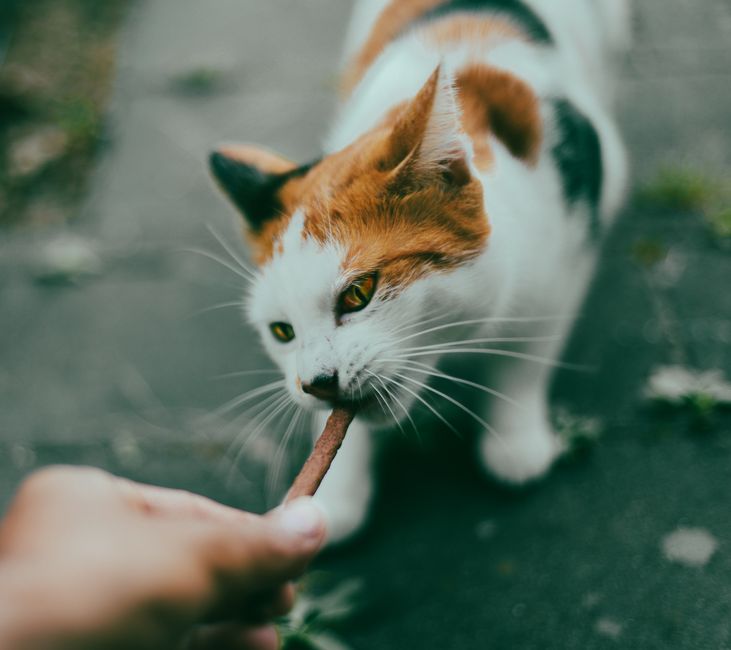
What you’re looking for: eyes that are squinted or partially closed (not the slow blink of a relaxed cat, but a tighter, more guarded look), ears that have rotated sideways or are flattened back rather than forward-facing, whisker pads that look tense or pulled back, and a muzzle that seems tighter than usual. A painful cat’s face often looks “smaller” somehow, more pinched and inward. Once you know what you’re looking for, you can’t unsee it.
Companion this with the head position. A cat holding its head slightly lower than normal, or tucked toward its chest, is often guarding pain somewhere.
Behavioral Changes That People Dismiss
Helpful resource: Catit Flower Fountain , Cat Water Fountain is a top-rated option for this. (As an Amazon Associate this site earns from qualifying purchases.)
This is where most owners lose time, because the signs are so easy to rationalize.
A cat that suddenly starts hiding under the bed when it normally greets you at the door. A cat who used to sleep on the couch next to you and now prefers the closet floor. A cat who has stopped jumping onto the kitchen counter (you might actually be relieved by this one, which is exactly the problem). A cat who flinches when you touch an area you’ve touched a thousand times before.
Grooming changes are big. Cats in pain often stop grooming the area that hurts, so you’ll see matting or rough coat in a specific spot. But they can also over-groom a painful area obsessively, creating bald patches or raw skin. Either extreme matters.
Appetite is trickier. Some cats in pain stop eating entirely. Others eat normally right up until they can’t. Dental pain is the one I see most often cause variable eating behavior: a cat who takes a few bites and walks away, drops food, or seems interested but then backs off. If you see that specific pattern, get their mouth looked at sooner rather than later. Dental disease is, as of 2026, still dramatically underdiagnosed in cats partly because owners don’t think to check and partly because cats don’t let you look easily.
Litter box behavior deserves its own mention. A cat who starts missing the box, going right next to it, or crying out while urinating is potentially in serious pain and potentially in danger. Male cats especially: straining to urinate with little or no output is an emergency. Do not wait until Monday. That’s a blocked bladder and it can be fatal within 24 to 48 hours.
Movement and Posture
A pain-free cat moves fluidly. They land jumps without hesitation, they stretch fully when they wake up, they walk with their tail up and their weight distributed evenly. Pain interrupts all of that in ways that are easy to miss if you’re not watching for them.
A cat with arthritis (much more common in cats over 10 than most people realize) will often stop jumping to high surfaces first, then start landing awkwardly, then begin hesitating before any jump. I’ve had owners tell me “she just got lazy as she aged.” In most of those cases, the cat was in pain, sometimes for a year or more before anyone put it together.
Watch for: a hunched posture when sitting (spine curved upward rather than neutral), one paw lifted or held differently, a stiff or stilted gait, reluctance to be picked up, or crying out when being lifted. A cat who used to flop over for belly rubs and now tenses up when you reach for them isn’t being moody. Something hurts.
Scenario: A 9-year-old cat named Biscuit stopped jumping onto a particular window perch her owner had seen her use daily for years. Owner assumed “just getting older.” At the vet, hip arthritis was visible on X-ray in both hips. With pain management and a set of pet stairs (affiliate link; the site may earn a commission), Biscuit was back on her perch within three weeks. Had they waited another year, the arthritis would have been significantly more advanced.
Vocalization: Less Reliable Than You Think
Everyone expects a cat in pain to yowl. Some do. But plenty of the most painful cats I’ve handled in the clinic were completely silent. I’ve had cats with fractured teeth, severe bladder inflammation, and post-surgical pain who made zero noise.
Vocalization matters when it’s out of character. A quiet cat who suddenly starts yowling, especially at night, warrants attention. A previously vocal cat who goes completely silent is equally worrying. Crying out when touched, when using the litter box, or when moving is significant.
What I’d push back on is the idea that a quiet cat is necessarily a comfortable cat. The absence of crying is not reassurance. That’s the thing people get wrong most often, and it’s the lie cats are very good at telling.
When to Call, When to Go Now
I get frustrated with advice that just says “consult your vet” without giving you any actual framework. So here’s a practical breakdown of how I’d triage this:
| Signs Observed | Urgency Level | What to Do |
|---|---|---|
| Squinting, hiding, reduced grooming, quieter than usual | Monitor closely for 24 hours | Call your vet for a same-week appointment |
| Not eating for 24+ hours, limping, flinching when touched | Urgent but not immediate | Call your vet today, same-day if possible |
| Straining to urinate (especially male cats), open-mouth breathing, collapse, crying out when touched | Emergency | Go to an emergency vet now, do not wait |
| Sudden paralysis or dragging of hind legs | Emergency | Emergency vet immediately; possible aortic thromboembolism |
| Labored breathing, pale or bluish gums | Emergency | Emergency vet immediately |
The American Association of Feline Practitioners (AAFP) publishes pain management guidelines that are worth bookmarking if you want to go deeper on the clinical side.
One thing I always tell clients: when you call the vet, describe the specific behaviors you’ve seen, not just “she seems off.” “She hasn’t jumped on the counter in four days and flinched when I touched her lower back” gets you much further than “she’s acting weird.” Front desk staff are trying to triage dozens of calls. Give them details and they’ll give you a more accurate callback time.
A Note on Hidden Pain in Older Cats
Cats over 10 are a special case. Chronic pain, particularly from arthritis, dental disease, or kidney disease (which can cause nausea that reads as discomfort), is so common in this age group that I’d argue any behavioral change in a senior cat should be taken seriously until proven otherwise. The American Animal Hospital Association (AAHA) recommends twice-yearly wellness exams for senior cats partly for this reason: by the time annual changes are obvious, they’ve often been building for six months.
I’ve seen owners spend significantly less over the life of their senior cat by catching pain early versus managing a crisis. Early arthritis caught at a twice-yearly exam and managed with joint supplements like Cosequin for Cats (affiliate disclosure: the site may earn a commission on purchases made through product links) or a prescription NSAID is a very different financial and quality-of-life outcome than advanced arthritis with muscle wasting. Not a guarantee, but the pattern holds up in my experience.
Scenario 2: Owner noticed 12-year-old cat Percy was sleeping in different spots than usual and had stopped “making biscuits” (kneading). She almost didn’t mention it at the annual exam because it seemed minor. The vet found significant dental disease with two abscessed teeth. Post-extraction, Percy started kneading again within a week. Owner’s words: “I didn’t realize how long he’d been uncomfortable.”
Sources
- Feline Grimace Scale: Validated pain assessment tool developed at Université de Montréal; includes free training resources for pet owners and clinicians.
- American Association of Feline Practitioners (AAFP) Pain Management Guidelines: Current clinical guidelines for feline pain recognition and treatment, updated regularly.
- American Animal Hospital Association (AAHA): AAHA accreditation standards and senior care guidelines, including recommendations for exam frequency in aging cats.
- International Association for the Study of Pain (IASP): Foundational resources on pain physiology, including animal pain recognition frameworks.
- Merola, I. & Mills, D.S. (2016). “Systematic review of the behavioural and physiological indicators of pain in domestic cats.” PLOS ONE: One of the most cited academic reviews of feline pain indicators.
Photo: cottonbro studio via Pexels
This article is for general informational purposes only and does not constitute veterinary advice. Pet health symptoms can have many causes and require professional evaluation. Always consult a licensed veterinarian for diagnosis and treatment specific to your pet.
Recommended Resources
Disclosure: As an Amazon Associate, we earn a small commission from qualifying purchases at no extra cost to you. We only recommend products that genuinely support the topics covered in this article.
- EVERLIT 95-Piece Vet-Approved Pet First Aid Kit (~$32), Vet-approved 95-piece kit for dogs and cats, covers cuts, burns, sprains, and emergencies until you can reach a vet.
- Nutramax Cosequin DS Joint Supplement for Dogs (132ct) (~$36), The #1 veterinarian-recommended joint supplement brand, clinically studied for reducing joint pain in dogs.