 Dr. Amanda Foster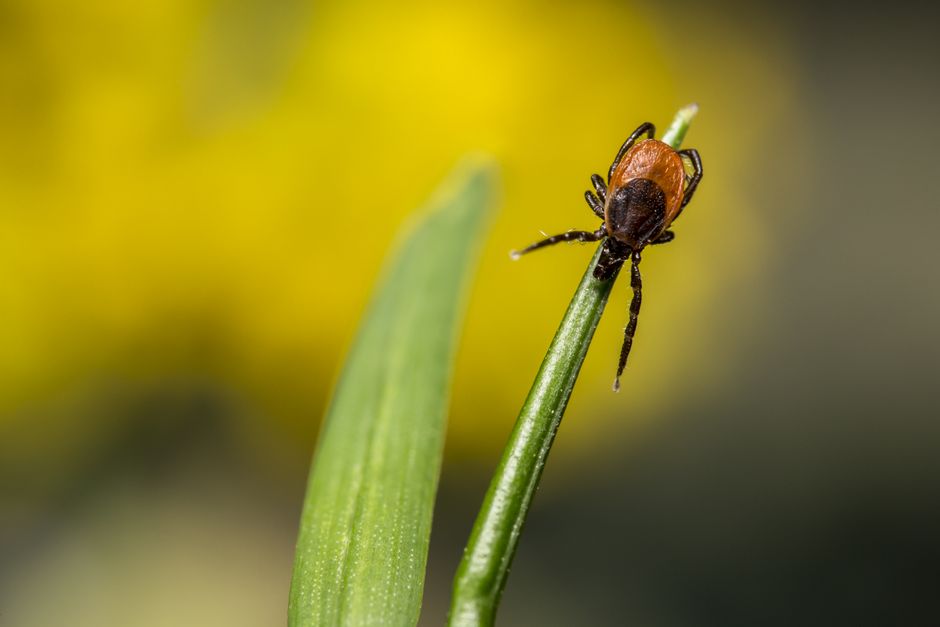
Roughly 300,000 dogs in the United States test positive for Lyme disease every year. That number comes from Companion Animal Parasite Council data, and it represents only the cases that get tested and reported. The actual infection rate is almost certainly higher, because plenty of dogs with tick-borne disease look fine for weeks or months before anything goes wrong.
Most articles on this topic spend too much time listing tick species and not enough time telling you what to actually do when your dog has been exposed, when to panic, and when to wait. Let’s fix that.
The hard truth is that tick-borne diseases in dogs are underdiagnosed, often because the signs are vague and easy to chalk up to “he’s just having an off day.” I’ve seen dogs come in after two weeks of intermittent limping and mild lethargy, owners convinced it was a sprain, and the 4Dx panel comes back positive for Lyme and Anaplasmosis both. That’s not rare. It’s routine.
- Lyme disease affects roughly 300,000 dogs annually in the U.S., per CAPC surveillance data.
- Most tick-borne diseases are treatable with doxycycline when caught early; delayed treatment raises complication risk significantly.
- A dog can have 2+ tick-borne co-infections simultaneously, the 4Dx Plus test screens for four at once.
- Symptoms typically appear 1-3 weeks post-exposure; some dogs stay asymptomatic for months.
- Year-round tick prevention is now recommended in most U.S. regions, not just spring through fall.
The Diseases You Actually Need to Know
There are over a dozen tick-borne pathogens capable of infecting dogs, but four dominate clinical caseloads in North America.
Lyme disease (Borrelia burgdorferi) is the most discussed, transmitted by the black-legged tick (Ixodes scapularis in the East, Ixodes pacificus in the West). It causes joint pain, shifting-leg lameness, fever, and fatigue. The classic “bull’s-eye rash” you hear about with human Lyme? Dogs don’t get it. What they get is a dog who suddenly won’t put weight on one leg, then fine two days later, then limping on a different leg a week after that. That shifting lameness is the tell.
Anaplasmosis (Anaplasma phagocytophilum) overlaps heavily with Lyme geographically because it shares the same tick vector. Symptoms: fever, joint pain, reduced appetite, sometimes spontaneous bruising or nosebleeds due to low platelet counts. It moves fast. I’ve watched dogs go from mildly lethargic on a Monday to hospitalized for low platelets by Thursday.
Ehrlichiosis (Ehrlichia canis, primarily via the brown dog tick) is more common in the South and Southwest. It has three stages. Acute ehrlichiosis looks like a bad flu. Subclinical ehrlichiosis is the terrifying phase: the dog appears fine while the organism quietly destroys bone marrow. Chronic ehrlichiosis is serious and harder to treat.
Rocky Mountain Spotted Fever (Rickettsia rickettsii) is the one that kills dogs fastest if missed. Despite the name, cases are concentrated in the Southeast, Mid-Atlantic, and parts of the Midwest. High fever, facial or limb swelling, red or pinpoint hemorrhages on the skin and gums, and it can progress to multi-organ failure within days. If your dog has a high fever after tick exposure and is getting worse by the hour, this is an emergency. Not a “let’s see how the weekend goes” situation.
What the Numbers Actually Show
Helpful resource: Arm & Hammer Dog Dental Spray , No Brush Needed is a top-rated option for this. (As an Amazon Associate this site earns from qualifying purchases.)
The geographic spread of tick-borne disease has shifted. The CAPC tracks infection rates by county, and as of 2026, Lyme-positive test results appear in all 48 contiguous states, not just the Northeast. Ehrlichia and Anaplasma have also expanded their ranges measurably over the past decade, following tick population expansion tied to milder winters.
Here’s where things get clinically useful:
| Disease | Tick Vector | Incubation Period | Key Symptoms | Treatment | Without Treatment |
|---|---|---|---|---|---|
| Lyme Disease | Black-legged tick | 2-5 months (to illness) | Shifting lameness, fever, lethargy | Doxycycline 4 weeks | Kidney disease (protein-losing nephropathy) |
| Anaplasmosis | Black-legged tick | 1-2 weeks | Fever, joint pain, low platelets | Doxycycline 2-4 weeks | Bleeding disorders, CNS signs |
| Ehrlichiosis | Brown dog tick | 1-3 weeks | Fever, weight loss, bleeding | Doxycycline 4-6 weeks | Chronic bone marrow suppression |
| RMSF | American dog tick, others | 2-14 days | High fever, edema, hemorrhage | Doxycycline (urgent) | Multi-organ failure, death |
| Babesiosis | Brown dog tick, others | 1-3 weeks | Anemia, weakness, jaundice | Imidocarb, atovaquone | Hemolytic anemia, organ failure |
Babesiosis deserves mention because it doesn’t respond to doxycycline, which is where the “treat empirically with doxy while we wait for test results” approach breaks down. It’s less common, but greyhound owners and people in certain Gulf Coast counties should know the name.
Massachusetts clocking 84 positive Lyme tests per 1,000 dogs tested isn’t abstract. That’s roughly 1 in 12 dogs tested in that state. If you live in the Northeast and skip year-round prevention, you’re playing genuinely bad odds.
Recognizing the Signs (Including the Subtle Ones)
This is where I’d push back on most symptom lists, which tend to read like medical dictionaries. In practice, the dogs that get missed are the ones whose owners describe them as “just a little off.” Not screaming in pain. Just… quieter than usual. Eating slower. Less interested in the ball.
A few scenarios worth knowing:
Dog returns from a hiking trip in the Berkshires, normal for 10 days, then starts favoring a front leg intermittently. Owner assumes a sprain. Takes two weeks to come in. 4Dx positive for Lyme. Starts doxycycline, improves within 5 days. Full resolution in 3 weeks. This is the best-case presentation.
Dog adopted from a rescue that pulled from rural Tennessee. Six weeks post-adoption, comes in for lethargy and mild nosebleed. CBC shows platelet count of 28,000 (normal is 175,000-500,000). 4Dx positive for Ehrlichia. Hospitalized two nights for supportive care, doxycycline for 6 weeks. Platelets normalize by week 4. That dog was in the subclinical phase before the adoption, nobody knew.
Outdoor dog in North Carolina. Owner brings her in because “her face looks puffy and she has a fever of 104.7.” RMSF suspected immediately based on clinical signs and geography. Doxycycline started before bloodwork returned. She was discharged three days later. If that owner had waited until Monday, the outcome would likely have been different.
The lesson across all three: timing matters more than any specific symptom.
Testing, Treatment, and What Things Cost
The ASPCA Poison Control Center handles tick-related toxicity calls too, not just toxic ingestions, but for disease testing the workhorse is the IDEXX 4Dx Plus panel. It runs $45 to $75 at most practices as of July 2026 and screens simultaneously for Lyme, Anaplasmosis, Ehrlichia, and heartworm antigen. It’s the single most efficient first step after tick exposure with symptoms.
For confirmatory testing (titers, PCR), your vet may send to a reference lab. Add a few days and typically $80-$150 depending on the panel.
Doxycycline, the first-line treatment for most tick-borne diseases, is inexpensive. A month’s course for a 60-pound dog runs roughly $25-$40 generic. What drives costs up is everything else: the exam, the bloodwork, hospitalization if the dog deteriorates, IV fluids. A straightforward Lyme case diagnosed early might total $200-$350 start to finish. An ehrlichiosis case caught late with hospitalization? Realistically $800-$2,000+. The prevention math is not complicated.
On prevention: the current options are genuinely good. Isoxazoline-class oral preventives (Bravecto, Nexgard, Simparica) kill ticks before the attachment time needed to transmit most pathogens. Bravecto lasts 12 weeks per dose; Nexgard and Simparica are monthly. Topicals like Frontline Plus or K9 Advantix II remain options but require intact, dry skin to work consistently. There’s also the Lyme vaccine (two-dose initial series, annual booster), which I’d recommend for any dog with regular outdoor exposure in endemic areas, it’s not a replacement for tick prevention, but it’s a solid additional layer.
I made the mistake early in my career of thinking the Lyme vaccine meant we could be more relaxed about the tick preventive. That’s wrong. The vaccine doesn’t cover Anaplasmosis, Ehrlichiosis, or RMSF.
Sources
- CAPC Parasite Prevalence Maps: Real-time tracking of tick-borne disease positive rates by county across the U.S., updated continuously.
- AVMA Tick-Borne Disease Resources: Clinical summaries and treatment guidance from the American Veterinary Medical Association.
- Littman MP et al. (2018): “ACVIM consensus update on Lyme borreliosis in dogs and cats,” Journal of Veterinary Internal Medicine – the primary clinical reference for Lyme management protocols.
- IDEXX Laboratories 4Dx Plus test data: Seroprevalence reporting from the largest veterinary diagnostic network in North America.
- Waner T, Harrus S (2000, updated citations ongoing): Canine monocytic ehrlichiosis, foundational research on subclinical phase duration and bone marrow effects.
Photo: Erik Karits via Pexels
This article is for general informational purposes only and does not constitute veterinary advice. Pet health symptoms can have many causes and require professional evaluation. Always consult a licensed veterinarian for diagnosis and treatment specific to your pet.
Recommended Resources
Disclosure: As an Amazon Associate, we earn a small commission from qualifying purchases at no extra cost to you. We only recommend products that genuinely support the topics covered in this article.
- EVERLIT 95-Piece Vet-Approved Pet First Aid Kit (~$32), Vet-approved 95-piece kit for dogs and cats, covers cuts, burns, sprains, and emergencies until you can reach a vet.
- Nutramax Cosequin DS Joint Supplement for Dogs (132ct) (~$36), The #1 veterinarian-recommended joint supplement brand, clinically studied for reducing joint pain in dogs.
- PetArmor Plus Flea & Tick Prevention, Small Dogs (6 doses) (~$32), Same active ingredient as Frontline Plus at a lower price, waterproof topical flea and tick prevention.
- PetArmor Plus Flea & Tick Prevention, Medium Dogs (6 doses) (~$32), Vet-quality flea and tick prevention for dogs 23–44 lbs at a fraction of the prescription price, 6-month supply.